

Biochemistry 101
In order for biological life to evolve and propagate across time, potential energy must be consumed from the environment & transformed into kinetic energy via the form of ATP.
The tiny bastards that sew our clothes tighter at night.
This little bugger is referred to as the Calorie, as is defined as the measure of energy that is required to raise the temperature of water by 1 degree Celsius.
This is because the mammalian species posses eukaryotic cells, which contain microscopic machinery and high-way systems that are upkept by the cellular currency known as adenosine triphosphate.

Compartmentalization of Enzymes within the cell
- Mitochondria – aids in fatty acid oxidation
- Cytosol – acids in fatty acid synthesis
- Nucleus – encode exon sequence to produce enzymes
- Lysosome – location of acid hydrolases which are the principal site of intracellular digestion.
Within these eukaryotic cells molecules interact and possess specific structure like the image below. This is importatnt to understand because different configurations dictate the function it instills within the CELL.

As humans we possess 37 trillion cells. It amazing how it doesnt mess up more frequently.
This molecular orchestra, is truly astonishing when you think about it and it occurs for the most part without your conscious awareness.
That does not mean you should ignore it, by letting your nutrition, sleep, movement, and happiness fall to the way side as we approach the winter months.
You will be forced to face this physical law of nature, if these aspected of health are chronically and habitually ingornoed.
Types of molecules
Hydrocarbons
- Alkanes – Contain single covalent bonds, aka sigma bonds, that are free to rotate in space and time.
- Propane (C3H8) – used as fuel for cooking.
- Alkenes – Contain double bonds that do not rotate and are referred to as pi bonds that posses pi clouds which hold 2 electrons in its orbital.
- Ethene (C2H4) – used in the production of plastics
- Alkyenes –
- Acetylene most commonly used to artificially ripen fruits.
Enzymes 101
S + E = ES = P + E
- S = subtrate
- E = enzyme
- ES = enzyme-substrate complex
- P = Product
It is estimated that there exists 4,150 different human enzymes that function as biological catalysts, which serve to increase the rate of a biochemical reaction without being changed in the overall process.
Enzymes are imperative to biological function because they can increase the rate of catabolic reactions up to 1014 its orginal rate of change.
Enzyme List
Types of molecular functional groups
- Alcohols
- Can be classified as primary, secondary, or tertiary compounds and are generated from hydration reactions. During this process double bonds of ethene are hydrated to generate the compound of ethene.
- Polyols “sorbitol”
- Dynamite & Alfred Nobel
- Glucose is toxic for type II diabetics who are not controlling their blood sugar levels will often be administered sorbitol.
- Polyphenols “Vitamin K”
- Electron Transport Chain
- Ubiquinone = oxidized
- Ubiquitol = reduced
- Urushiol is the active polyphenol molecule present in poison ivy and functions as an antioxidant that love to steal electrons from neighboring cells.
- Mechanism of action for vitamin E
- Thiols “Cysteine”
- Ethers “Diethyl ether”
- Epoxdies “Vitamin K2,3 epoxide”
- Carbonyl Groups
- Aldehyde – reduced to primary alcohols such as carboxylic acid
- Ketone – reduced to secondary alcohols
- Hemiacetals – contain alcohol & ether functional groups on same carbon atom
- Aromatic Compounds
- Benzene is a cyclical multiple conjugate double bond system. These aromatic compounds represent stability and is commonly found in nature like ESTRADIOL. Therefore, aromatase inhibitory compounds were initially developed for breast cancer patients.
Amino Acids 101
Simply speaking, these molecules are the building blocks that are linked together to synergize molecular structures that possess a unique 3-dimensional geometric arrangement, which dictates the function of this molecule. In nature evolutionary biologists have discovered 300+ amino acids, but only 20 of them are commonly found as constituents of mammalian proteins.
Acid Buffering
bicarbonate buffer system
- The lungs regulate the loss & retention of carbon dioxide by altering respiration rate through the endocrine and autonomic nervous system.
- The kidneys regulate the loss & retention of bicarbonate, ammonia, as well as other acid/basic compounds present in blood which possess
Collagen Synthesis
Glycine is considered an important amino acid because it comprised 33% of collagen. This is significant because the OH groups of this molecule increase the strength of hydrogen bonding, which increases the polarity of this structure. When this occurs glycine can form cross-linkages which give rise to four significant biological features of life.
- Type I = Tendons & ligaments
- Anterior Cruciate Ligament
- Type II = cartilaginous structures that resist compressive forces
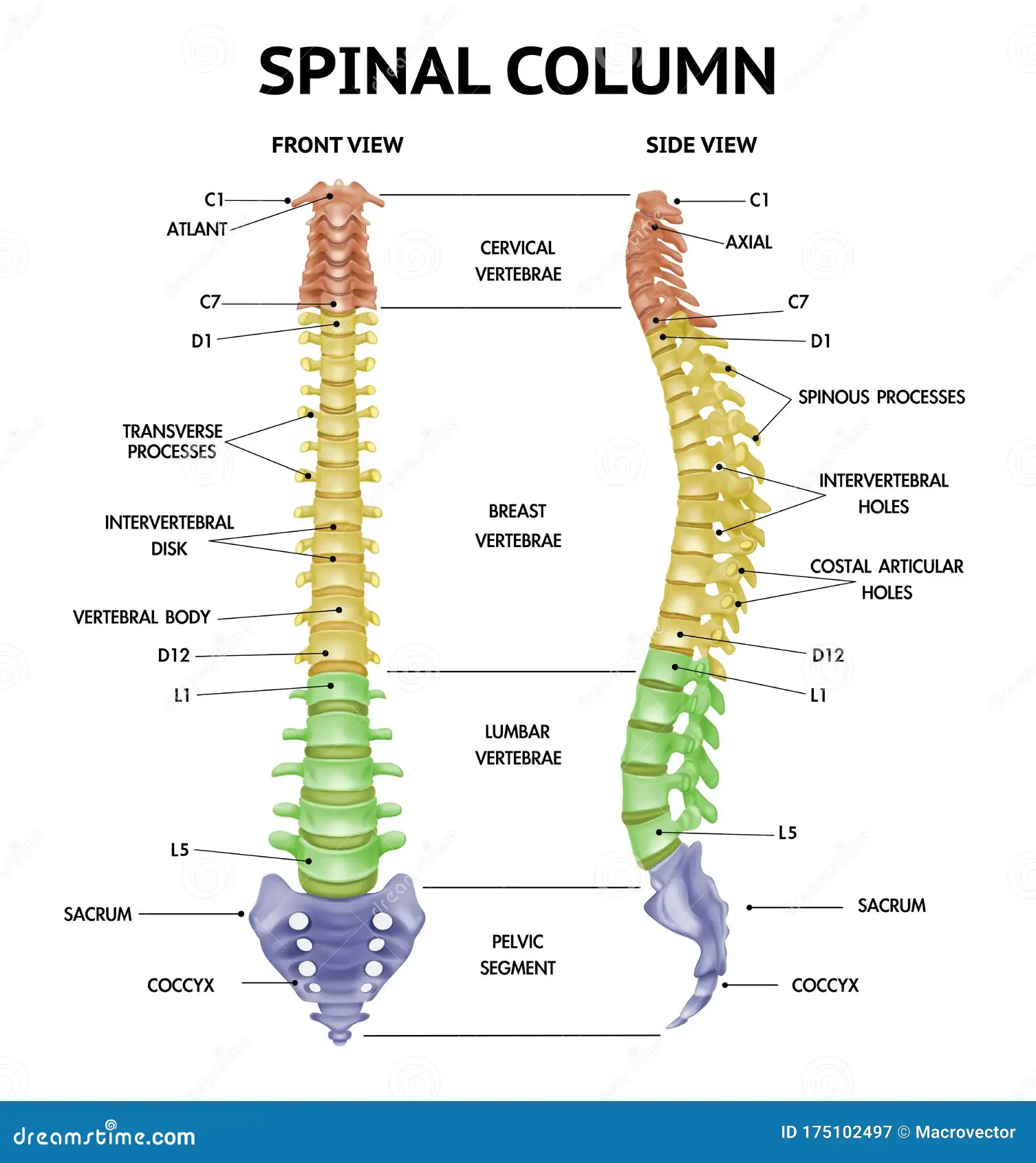
- Intervertebral Disc
- Type III = vascular structures
- Abdominal Aorta
- Type IV = basement membrane of cells.
Clinical Correlations
- Scurvy – lysyl hydroxylase and ascorbate acid deficiency.
- Ehlers Danlos Syndrome – dysfunctional enzyme/protein of lysyl-hydroxylase, which gives rise to lose ligaments that are prone to dislocation.
- Osteogenesis Imperfecta – genetic defect in which glycine is replaced by a bulk side chain and gives rise to brittle bone diseases.
- Marfan’s Syndrome
- Phenylketonuria
- Maple Sugar Urine Disease (MSUD)
- Homocystinuria
- Alkaptonuria
Carbohydrates 101
Are by definition “hydrates of carbon” and can be named with the use of organic chemistry and the molecular equation of CnH2nOn.
In nature the simplest carbohydrates are known as glyceraldehyde & di-hydroxy acetone.
Glucose, C6H12O6, is AKA known as dextrose, and is the most abundant sugar in nature, which possess 16 unique stereoisomers, but commonly exists in the D confirmation.

By definition glucose & fructose are considered to be isomers, which possess the same chemical formula, but are arranged geometrically different in space and time. However, these compounds differ on how many stereoisomers they possess, which is determined by how many chiral carbon each compounded.
- Glucose = 4 chiral carbons & 16 stereoisomers
- Fructose = 3 chiral carbons & 8 stereoisomers
Epimers are by definition isomers that differ in their configuration around one specific carbon atom.
- C4 Epimers = Galactose/Glucose
- C2 Epimers = Mannose/Glucose
In organic chemistry, carbohydrates are depicted using Fischer projections in order to distinguish between the D & L enantiomers.
Enantiomers are by definition a pair of molecules that are NON-SUPERIMPOSABLE mirror images of one another.
Functional CHO groups
- Disaccharadies
- Maltose
- Cellobiose
- Cellulose
- Cellulase – termite bacteria
- Lactose – 1,4 bonds = dairy prodcuts
- Sucrose – 1,2 bonds = fruit prodcuts
- Oligosaccharides
- Starch – repeating polyermer units of maltose and isomaltose.
- Alpha Amylase
- Alpha Amlopectic
Lipids 101
In the field of clinical nutrition, these fatty acids can also be classified by length, which dictates the amount of potential energy that can be converted into kinetic metabolic energy that is required for life.
- Saturated – No double bonds present b/t carbon atoms.
- Monosaturated – Only one double present b/t carbon atoms.
- Polysaturated – More that on double present b/t carbon atoms.
This biochemical classification of molecules includes fatty acids, triacylglycerols, cholesterol, steroid hormones, as well as the fat soluble vitamins known as A, D, E, K.
Within a cellular membrane the LCFA’s are twisted & contorted in there physical appearance. This is important because this allows neighboring molecules to form “weak dipole moments” between the hydrogen atoms of other LCFA’s. However, in the presence of double bonding, this puts a 120 degree kink in the chain, which prevents it from rotating freely in space and time.
Proof
- As the chain length increases of the FA’s, so does the melting point of the entire organic structure.
- As the chain increases in complexity, through double bonding, the melting point will decrease of the entire organic structure.
Lipid Functional Groups
- Linoleic Acid – Serves as a precursor to arachidonic acid =, which is a substrate for prostaglandin synthesis.
- Alpha Linolenic Acid – Serves as a precursor for omega 3 fatty acids such as.
- Triacylglycerols By definition, these molecules are LCFA’s that will create three ester bonds to hold this molecules together
- Phospholipids By definition these molecules contain two LCFA’s that are attached to a glycerol backbone
- Phosphatidylserine
- Phosphatidylethanolamine
- Phosphatidylcholine “Lessithin”
- Phosphatidylglycerol –> Cardiolipin = mitochondrial function
- Phosphatidylinositol – secondary chemical messenger.
Sphingolipids
- Sphingomyelin – palmitic, steric, lignoeric and nervonic acid constitute the long chain fatty acids of the grey & white matter of the brain.

Glycosphingolipids
- Cerebrosides
- Galactocerebrosides
- Glucocerebrosidase
- Sulfatides
Cholesterol
By definition these molecules are referred to as “sterols” because they contain a polar OH group which provides this compound with amphiphilic characteristics. In the discipline of organic chemistry these compounds exist as a fused 4 ring structure that provides a structural component to eukaryotic cellular membranes.
Significance
- Synthesis of Emulsification agents like bile acid salts.
- Synthesis of steroid hormones
- Synthesis of Vitamin D


Leave a Reply